Enhanced ER Diagram Generator
Create Enhanced Entity Relationship Diagrams with specialization, generalization, and inheritance. Describe your database hierarchy and let AI handle the notation.
Last updated: July 2026
Try These Examples
What is an Enhanced ER Diagram?
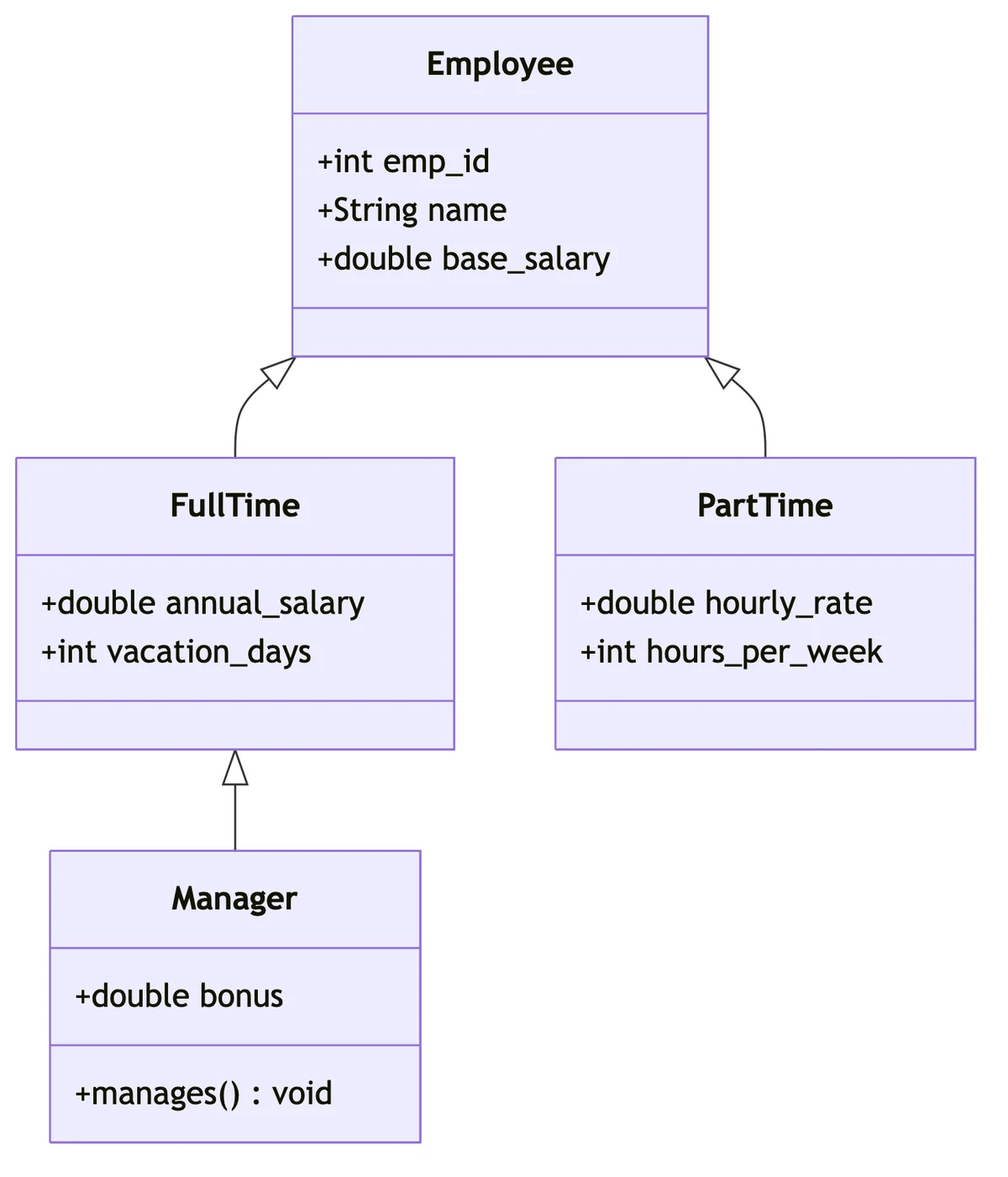
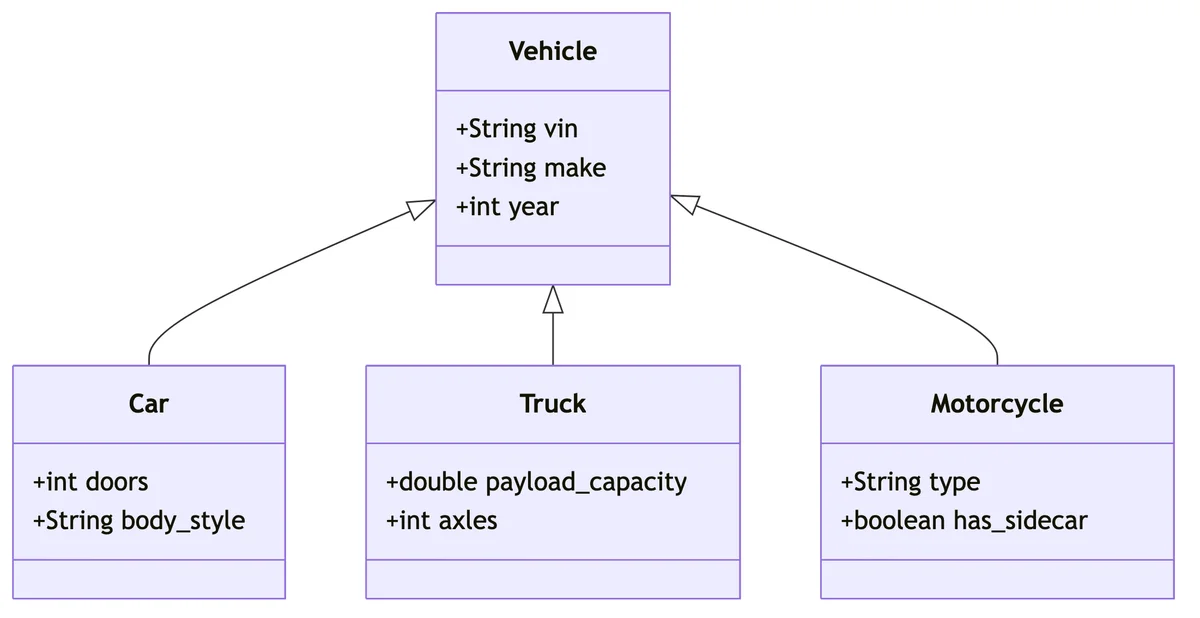
An Enhanced ER Diagram (EER) extends standard ER diagrams with inheritance concepts. Use EER when your database has "is-a" relationships—like Employee → Manager, or Vehicle → Car, Truck, Motorcycle.
Standard ERD handles entities and relationships. Enhanced ERD adds specialization (breaking entities into subtypes), generalization (grouping entities under a parent type), and inheritance (subtypes inherit parent attributes).
EER vs ER: What's Actually Different
An EER (enhanced entity-relationship) diagram is a superset of the classic ER model. It keeps everything ER has and adds object-oriented concepts for modeling hierarchies. Here's what EER adds.
| Concept | ER Diagram | EER Diagram |
|---|---|---|
| Specialization / generalization | Not supported | Core feature — subclass hierarchies |
| Subclasses & superclasses | All entities are flat | Entities can inherit from a parent |
| Attribute inheritance | None | Subclasses inherit parent attributes |
| Disjoint / overlapping | Not applicable | Models disjoint or overlapping subclasses |
| Union types (categories) | Not available | A subclass can span multiple superclasses |
| Best for | Simple, flat schemas | Complex domains with hierarchies |
EER Diagram Notation
EER notation extends ER with a small set of symbols for hierarchies. Here's what each one means.
Specialization & Generalization
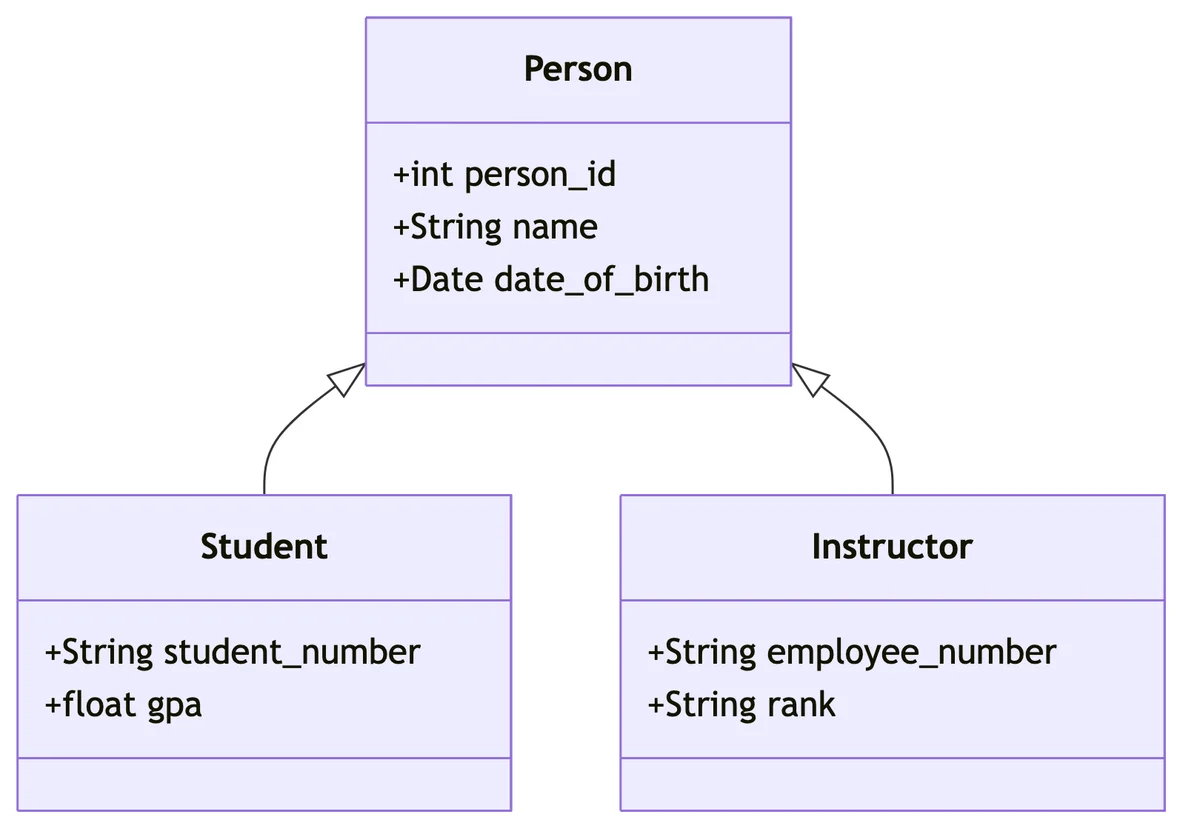
Specialization splits a superclass (e.g. Person) into subclasses (Student, Instructor). Generalization is the reverse — combining similar entities into a shared superclass. It's drawn as a line from the superclass to a circle, then to each subclass.
Subclasses & Inheritance
A subclass inherits all attributes and relationships of its superclass and adds its own. In the examples below, Student inherits person_id and name from Person, then adds student_number and gpa.
Disjoint vs Overlapping
A 'd' in the circle means the subclasses are disjoint — an entity belongs to at most one subclass. An 'o' means overlapping — it can belong to several. Total vs partial participation is shown with a double vs single line.
Union Types (Categories)
A category (union type) is a subclass whose members come from a union of different superclasses — for example an Owner that can be either a Person or a Company.
EER Diagram Examples
Real enhanced entity-relationship examples showing specialization hierarchies. Each was generated from a plain-English prompt.
When to Use Enhanced ERDs
Choose the right diagram type for your database design needs:
Choose Enhanced ERD for:
- Employee/user role hierarchies
- Product category trees
- Any "is-a" relationship in your data
- Academic database design projects
- Object-relational database modeling
Stick with standard ER diagrams for:
- Simple CRUD apps
- Flat data without inheritance
- Quick prototypes
Common Enhanced ERD Scenarios
HR & Employee Systems
Model employees specializing into managers, developers, analysts—each with unique attributes but sharing common employee data.
E-commerce Product Hierarchies
Products categorize into electronics, clothing, furniture—each with category-specific attributes.
Academic Systems
University databases where Person generalizes Student and Professor, with overlapping membership possible.
Create Your Enhanced ER Diagram
Describe your database hierarchy in plain English. Our AI generates proper EER notation with specialization symbols and inheritance relationships.
Need a simpler diagram? Try our standard ER Diagram Generator. ER Diagrams — Standard entity relationship diagrams
FAQ
Related Database Diagram Tools
Explore other database design tools: